Eating out in Japan
How to order food in Japanese
Point at what you want and say これをください (kore o kudasai, “this one, please”), or name the dish and add をお願いします (o onegai shimasu). That covers most orders in Japan. The rest of a meal follows a pattern: you're greeted and asked how many, you call the staff over to order, and you pay at the register on the way out, with no tip.
The phrases that do most of the work
With these, you can get through almost any meal, from a ramen counter to a sit-down restaurant.
- すみません。Sumimasen.Excuse me.To call the staff over, or to catch someone's eye.
- これをください。Kore o kudasai.This one, please.Pointing at the menu, a photo, or the plastic food in the window.
- 味噌ラーメンをお願いします。Miso rāmen o onegai shimasu.Miso ramen, please.Ordering by name: any dish, then をお願いします.
- おすすめは何ですか。Osusume wa nan desu ka.What do you recommend?When the menu is a wall of handwriting.
- お水をください。Omizu o kudasai.Some water, please.Water and tea are usually free, and often self-service.
- お会計お願いします。Okaikei onegai shimasu.The check, please.When you're ready to pay.
- ごちそうさまでした。Gochisōsama deshita.Thank you for the meal.On your way out, to the staff or the cook.
Walking in and getting a table
Staff greet everyone who comes in with a loud いらっしゃいませ. It's a welcome, not a question, so there's nothing to answer. Next they ask how many you are, and you answer with the number, or with fingers. At a counter place, you may simply be shown to a seat.
- いらっしゃいませ!Irasshaimase!Welcome!What the staff call out as you come in. No answer is expected: a nod is plenty.
- 何名様ですか。Nanmei-sama desu ka.How many in your party?Asked at the door.
- 二人です。Futari desu.Two of us.The answer. One is hitori desu, three is sannin desu, and holding up fingers works too.
The meal-ticket machine
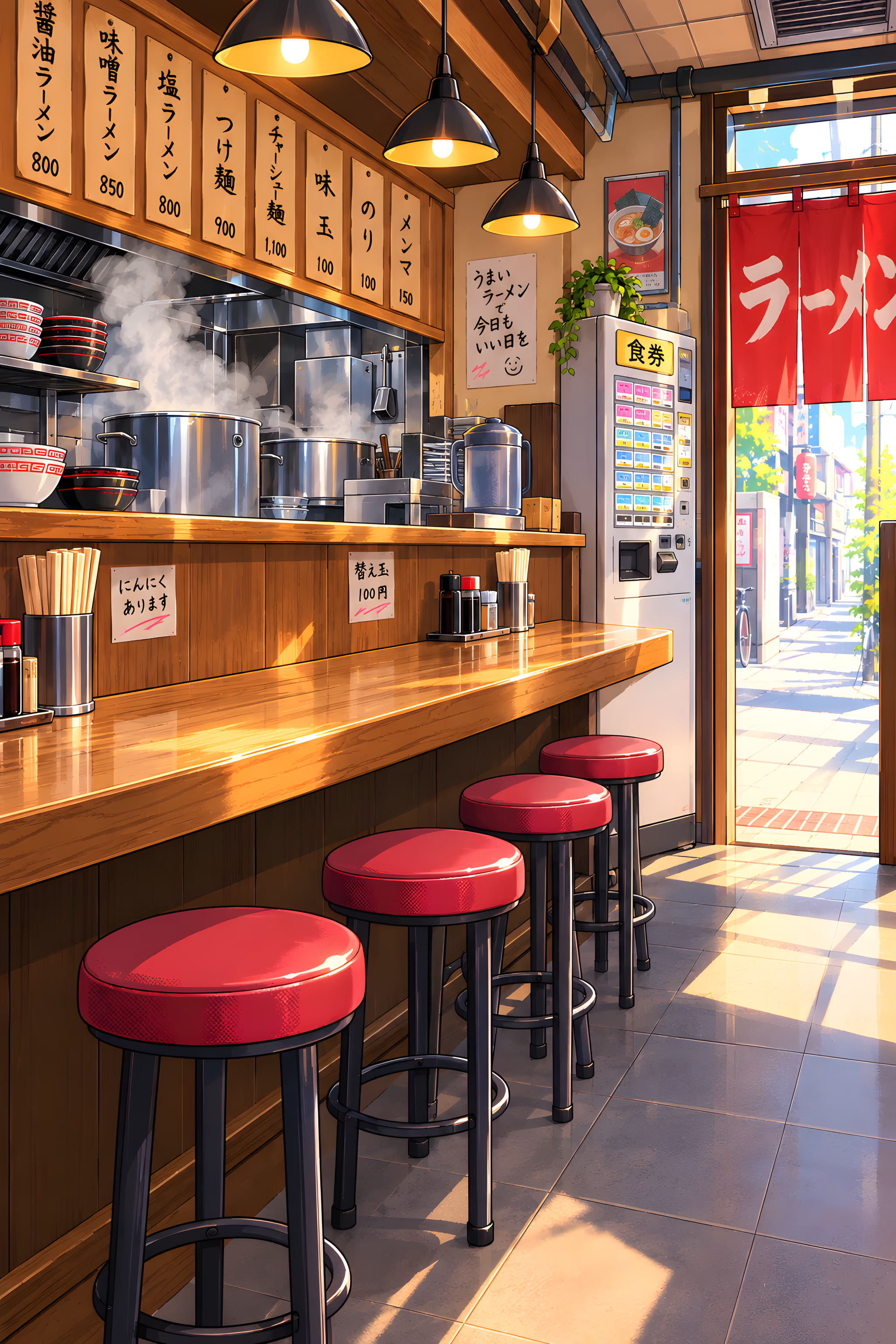
At many ramen shops and set-meal places, you order before you sit, at a machine by the door (券売機, kenbaiki). Put your money in, press the button for your dish, and hand the ticket it prints to the staff, who may ask how firm you like your noodles. The buttons are often in Japanese only, so it helps to know the name of what you want.
- 食券shokkena meal ticketBought from the machine by the door, then handed to the staff.
- かためでお願いします。Katame de onegai shimasu.Firm, please.When they ask how you like your noodles. Regular is futsū, soft is yawarakame.
The ramen shop scene has the lines for it, said to a friend:
To Mei, in lunch at a ramen shop
食券買ってくるね
shokken katte kuru ne
I'll go buy the meal ticket.
Say it at a shop with a ticket vending machine before sitting down.
To Mei, in lunch at a ramen shop
麺、かためでいい?
men, katame de ii?
Firm noodles okay with you?
Ask your friend before ordering when the shop lets you choose noodle firmness.

Ordering at the table
Staff don't usually come by to check on you, so when you're ready, call them with すみません. Name each dish with をお願いします or ください, count with つ, and finish with 以上です so they know you're done.
- 注文、いいですか。Chūmon, ii desu ka.Can I order?Once someone comes over.
- これを二つください。Kore o futatsu kudasai.Two of these, please.Count dishes with つ: hitotsu, futatsu, mittsu for one, two, three.
- 以上です。Ijō desu.That's all.To say you've finished ordering.
Among friends it's more relaxed. At an izakaya, the first round is decided in a word, and at a yakitori bar every skewer comes with a choice:
To Ren, in drinks after work
とりあえず生でいい?
Toriaezu nama de ii?
Draft beer to start, okay?
The standard opener when ordering the first round at an izakaya.
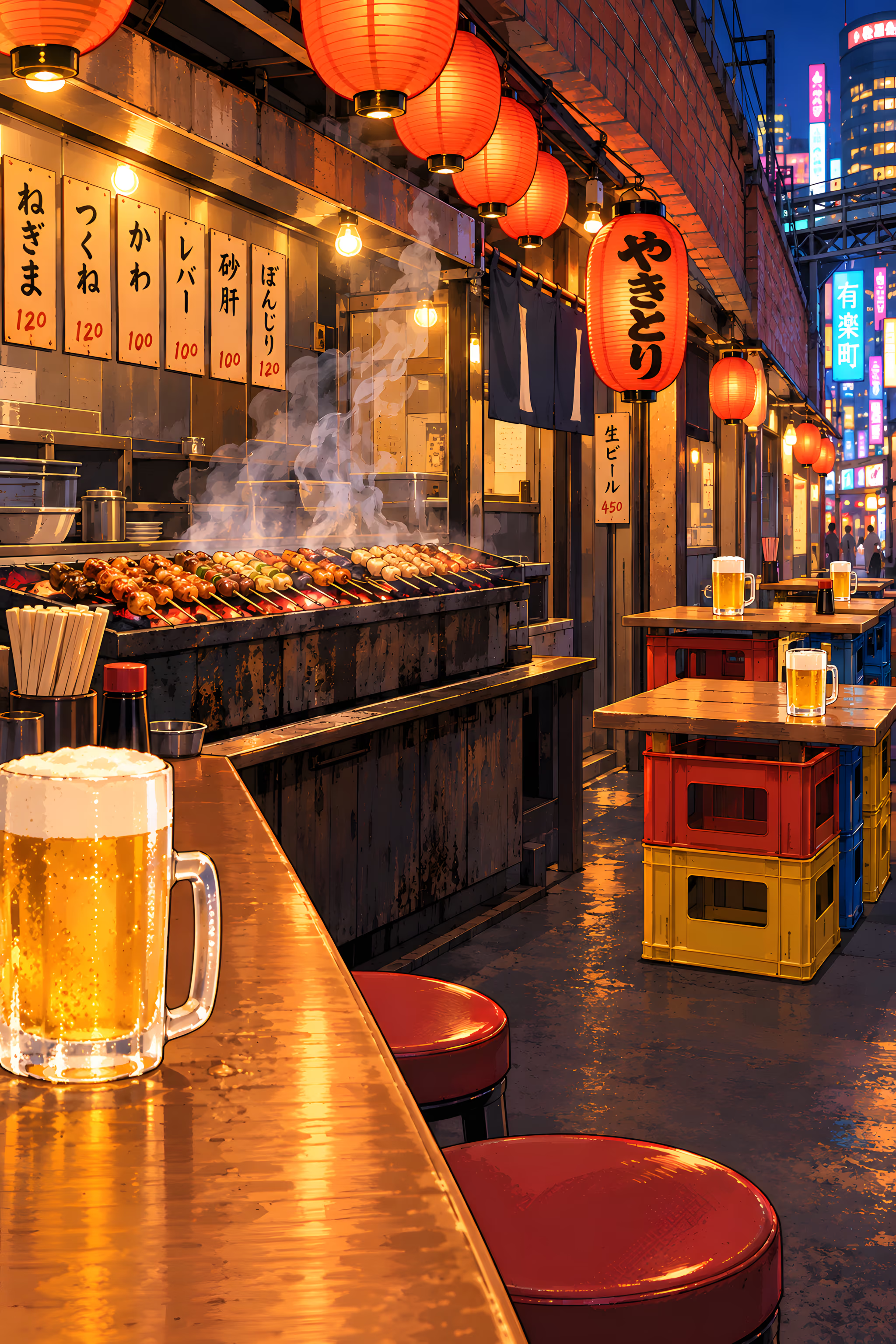
To Kenji, in yakitori under the tracks
塩とタレ、どっちにする?
Shio to tare, docchi ni suru?
Salt or sauce, which do you want?
Ask when ordering skewers — most yakitori places let you pick salt or tare for each one.
To Kenji, in yakitori under the tracks
盛り合わせにしようか
Moriawase ni shiyō ka
Shall we get the assortment?
Suggest the mixed skewer set when you can't decide what to order.


Asking about spice, and what's in it
Japanese food is mostly mild, but ramen, curry, and anything red can surprise you, and some shops let you choose the heat. If there's something you can't eat, say so plainly: たべられません (taberaremasen, “I can't eat it”) is clearer than explaining an allergy or a diet.
- 辛いですか。Karai desu ka.Is it spicy?Before ordering anything red.
- 辛さ控えめでお願いします。Karasa hikaeme de onegai shimasu.Go easy on the spice, please.Where you can choose how hot it is.
- 豚肉は入っていますか。Butaniku wa haitte imasu ka.Is there pork in it?Asking what's in a dish.
- 卵が食べられません。Tamago ga taberaremasen.I can't eat eggs.Name what you can't eat: pork is butaniku, shrimp is ebi, wheat is komugi.
Mei, opening lunch at a ramen shop
辛いの平気?わたし、辛いの大好き。
Karai no heiki? Watashi, karai no daisuki.
Are you okay with spicy food? I love spicy stuff.
To Kenji, in yakitori under the tracks
レバー、食べられる?
Rebā, taberareru?
Can you eat liver?
Check before ordering an organ skewer like liver or gizzard, which some people avoid.
At an izakaya: sharing, refills, and the last dish
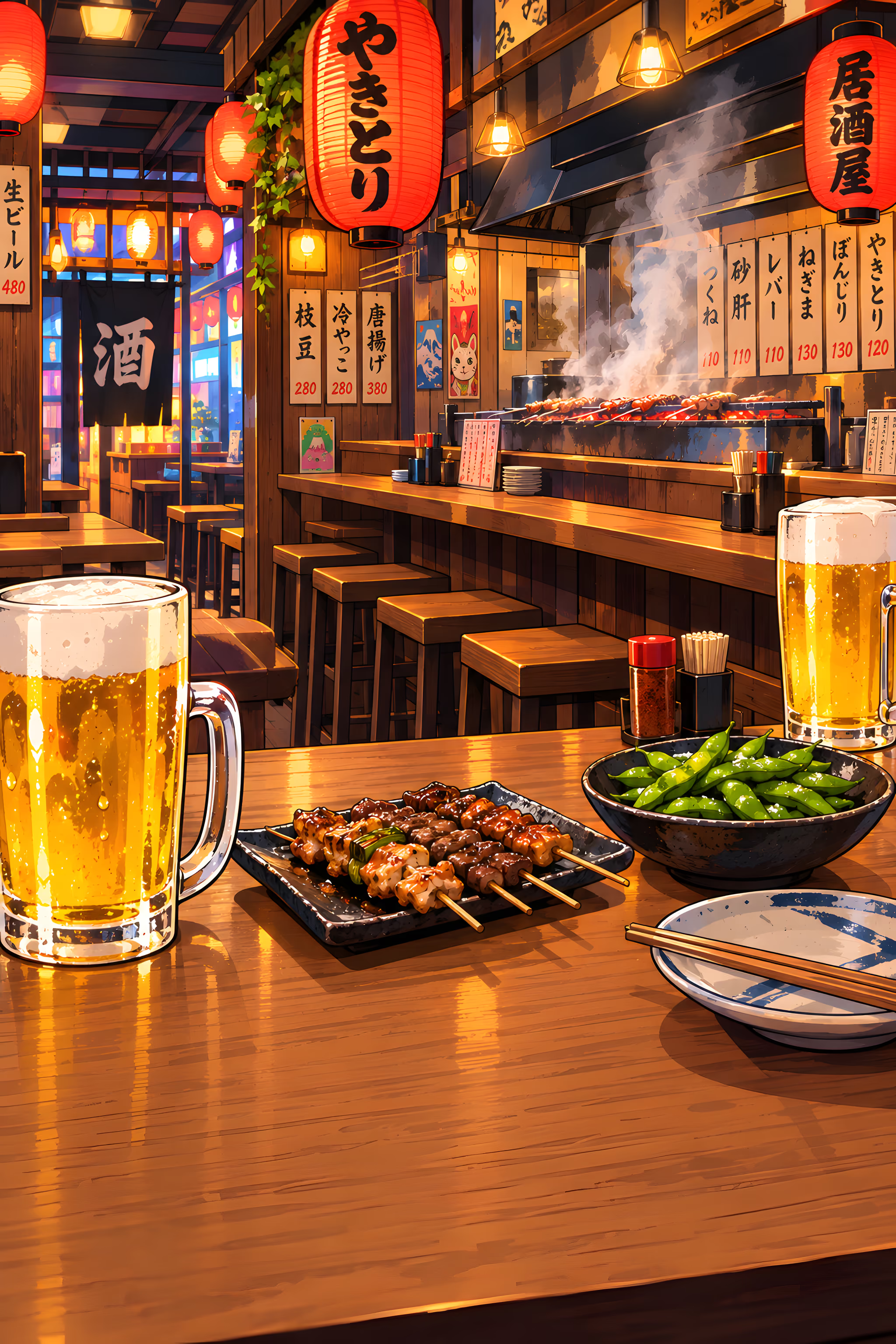
An izakaya is a Japanese pub, and its food comes in small plates for the whole table. A little dish you didn't order arrives first, and stays on the bill. Refills are おかわり (okawari), and the night usually ends with 締め (shime), a last bowl of rice or noodles.
- お通しotōshia small starter that comes unaskedAt an izakaya, charged per person, as a kind of table charge.
- 取り皿をください。Torizara o kudasai.Some small plates, please.Izakaya dishes come to the middle of the table, to share.
To Ren, in drinks after work
取り皿もらおうか
Torizara moraō ka
Let's get some small plates.
Say this when shared dishes arrive and you need plates to divide them.
To Ren, in drinks after work
すみませーん、おかわりください
Sumimasēn, okawari kudasai
Excuse me — another one, please.
Call out to the staff for a refill; stretch the すみませーん to get their attention.
To Ren, in drinks after work
そろそろ締めにする?
Sorosoro shime ni suru?
Should we wrap up with a last dish?
Near the end of the night, suggesting a final rice or noodle dish before the bill.
Cafés, convenience stores, and festival stalls
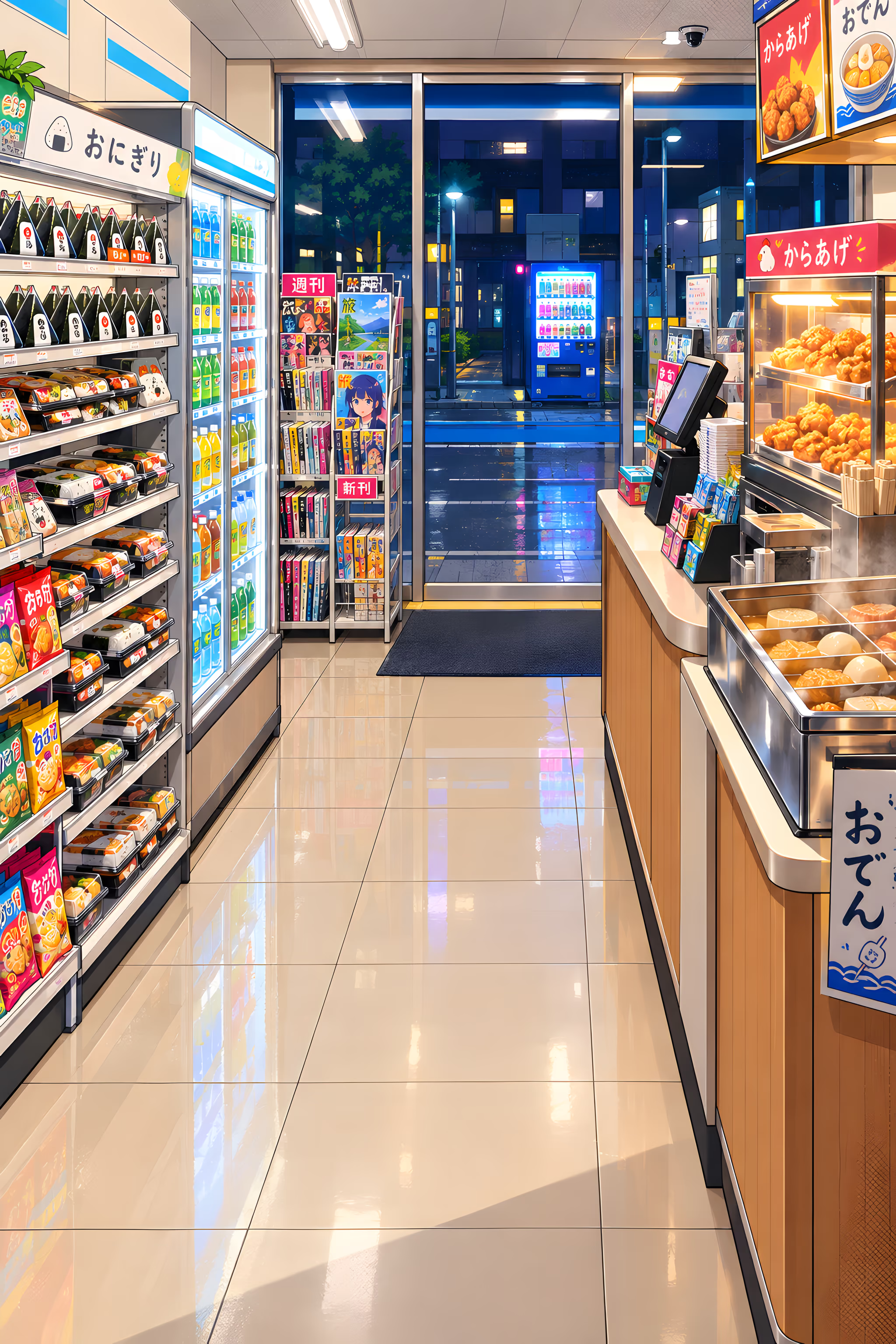
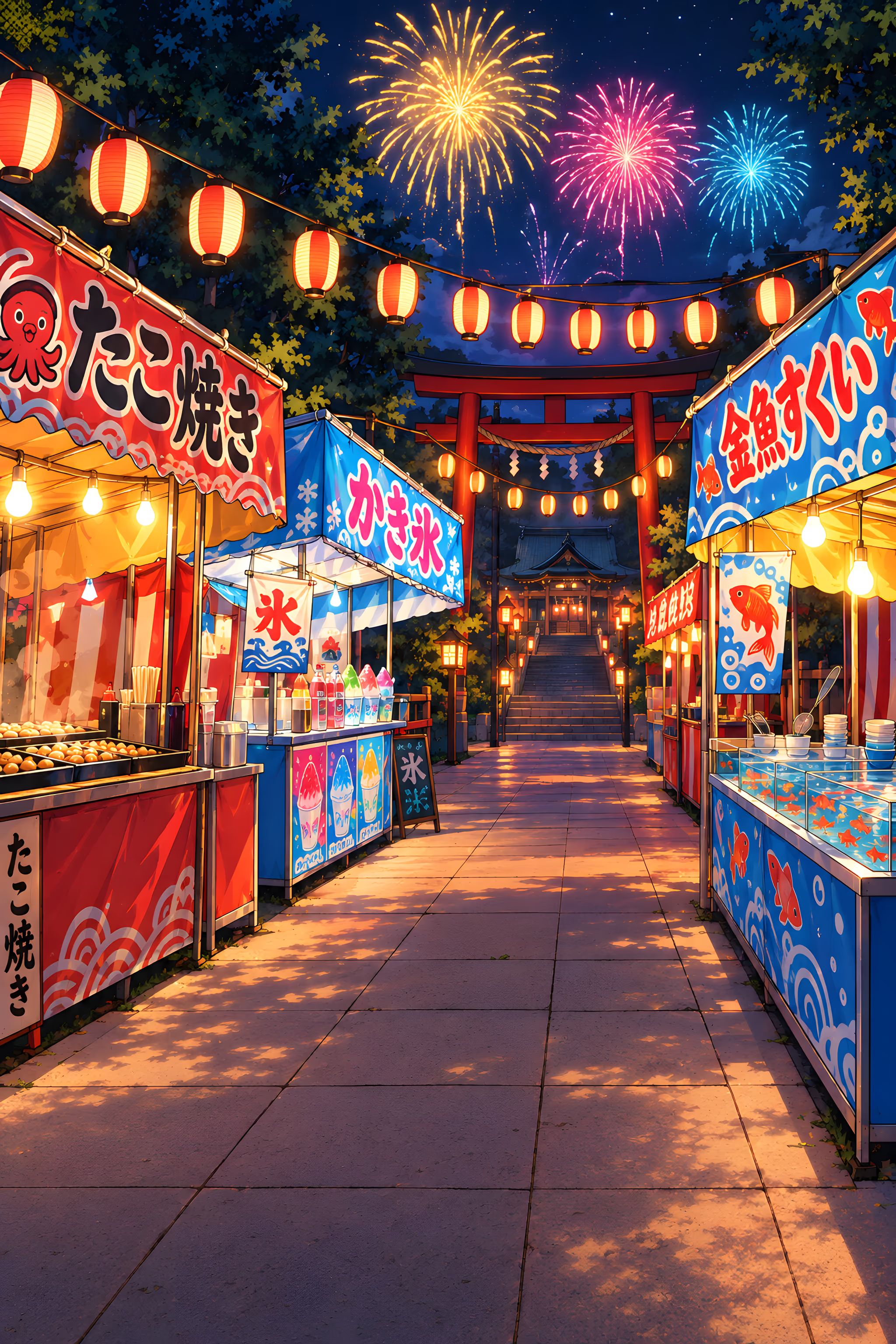
At a counter, you order and pay in one go, and the questions come to you: whether you're eating in, and at a convenience store, whether to heat your food up, and whether you need a bag. At a festival's food stalls, you pay as you order, usually in cash.
- 店内で。Tennai de.For here.The answer when the counter asks 店内でお召し上がりですか, “will you be eating in?”
- 持ち帰りで。Mochikaeri de.To go.The other answer.
- 温めますか。Atatamemasu ka.Shall I heat it up?What a convenience store's clerk asks over a bento or a pork bun. Yes is はい、お願いします.
- 大丈夫です。Daijōbu desu.I'm fine, thanks.A polite no: to heating it up, a bag, or chopsticks.
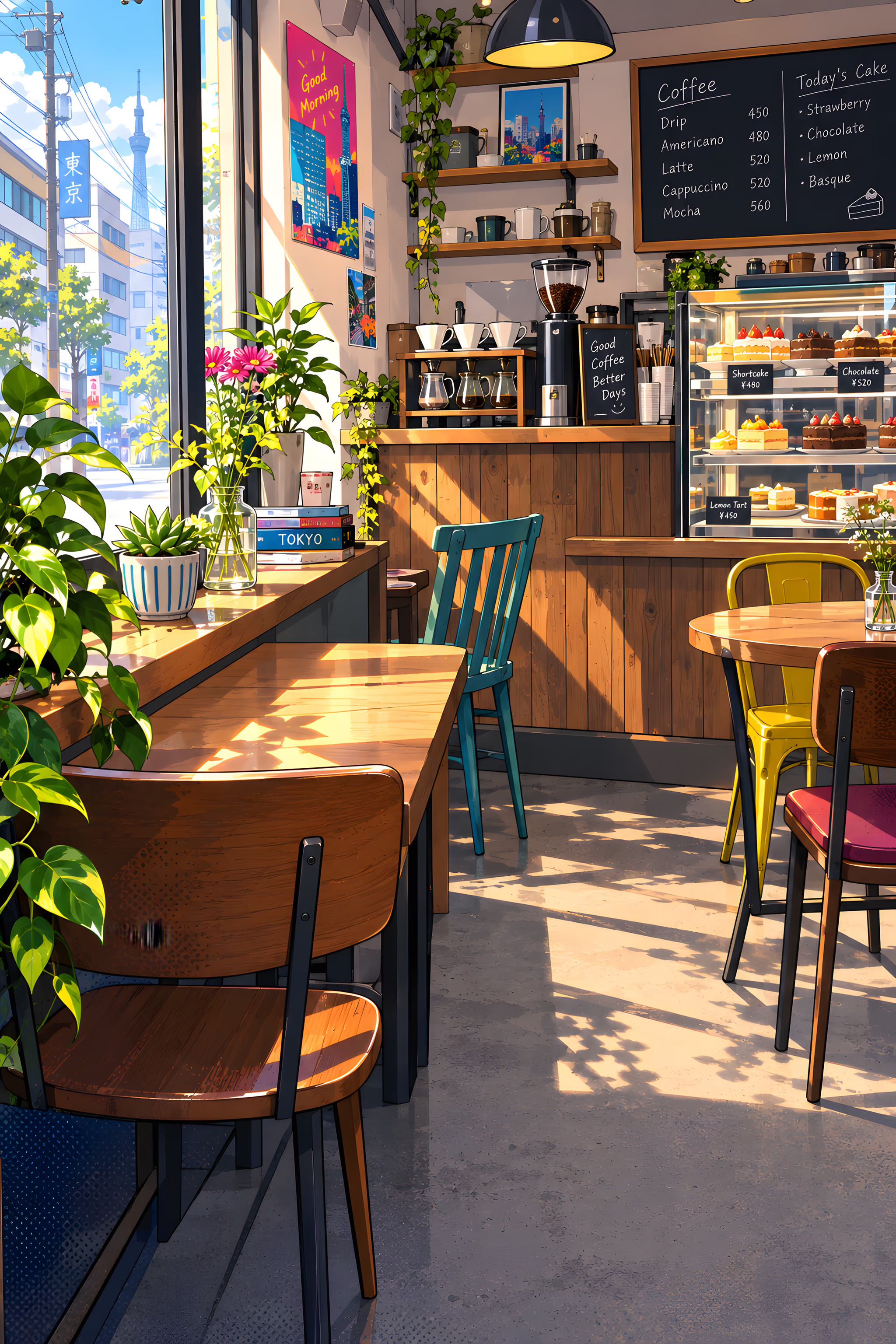
To Mei, in coffee and cake
ホットとアイス、どっちにする?
hotto to aisu, dotchi ni suru?
Hot or iced?
Asking a friend how they want their coffee before ordering.
To Mei, in late-night snack run
肉まん温めてもらおうよ
Nikuman atatamete moraō yo
Let's get them to heat up the pork bun.
Say it to your friend before paying, when you want the clerk to microwave something.
To Mei, in summer festival
たこ焼き、一緒に買わない?
Takoyaki, issho ni kawanai?
Should we get takoyaki together?
Say it when you spot a food stall and want to share the order.
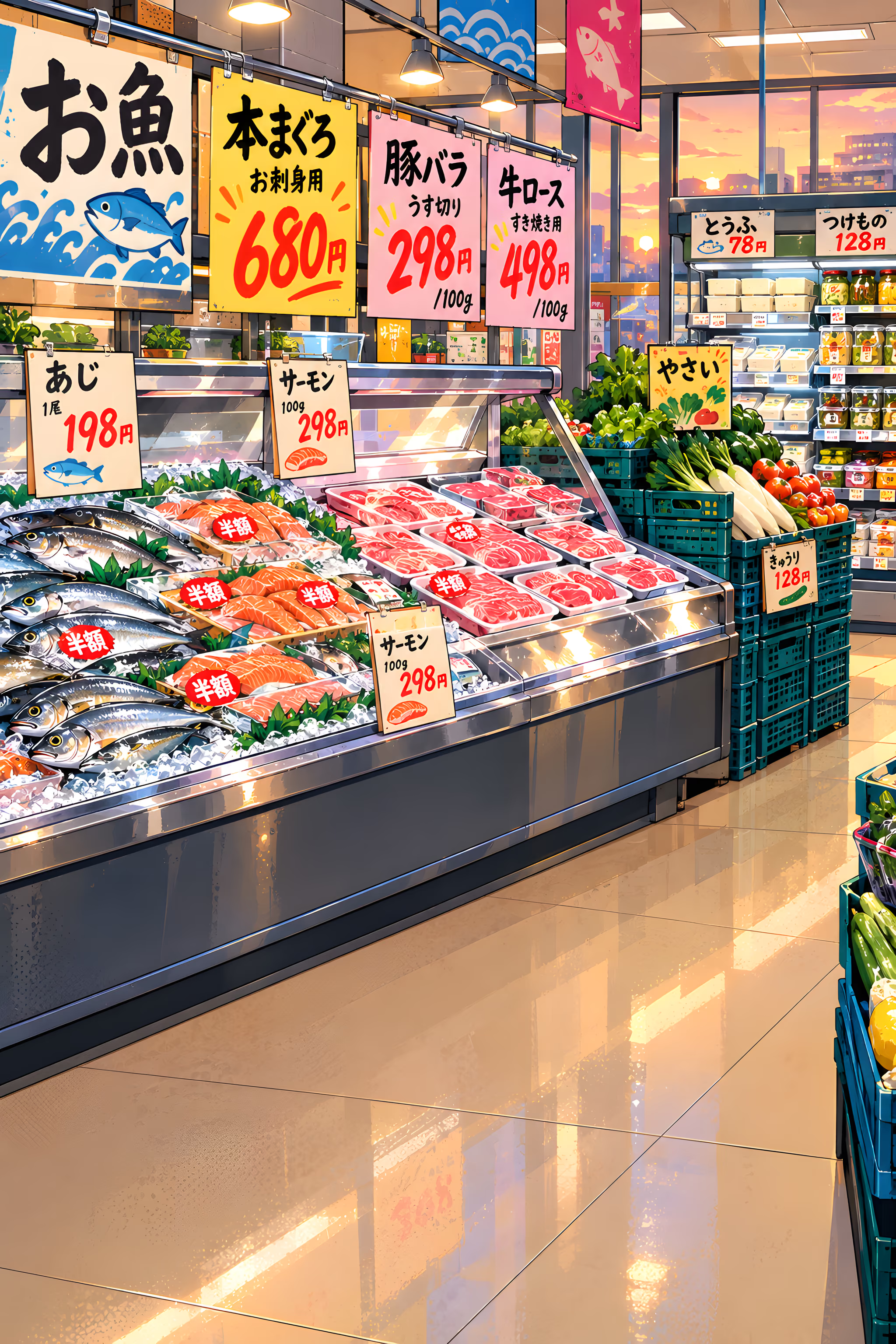
To Kenji, in bargains at the supermarket
これ、半額になってますよ。
Kore, hangaku ni natte masu yo.
This one's half price now.
Say it when you spot a discount sticker and want to point it out to Kenji.
Paying, and leaving
Ask for the check with お会計お願いします. In many restaurants you take the bill to the register by the door rather than paying at the table. There's no tip to work out, and on your way out, ごちそうさまでした thanks the people who made the meal.
- カードで払えますか。Kādo de haraemasu ka.Can I pay by card?Small places, and festival stalls, may take cash only.
- 別々でお願いします。Betsubetsu de onegai shimasu.Separate checks, please.Splitting the bill at the register.
Try it out loud
Reading a phrase is one thing, and saying it to someone who answers is another. In Unsubtitled you can order ramen with Mei, yakitori with Kenji, and the first round with Ren, out loud, with furigana and a translation until you no longer need them.
Start talkingThe scenes about eating out
Each has its own page, with every way it can begin and the phrases and words it uses.
- Lunch at a ramen shop芽衣(めい) · Ramen shopcasual
- Drinks after work蓮(れん) · Izakayacasual
- Yakitori under the tracks健二(けんじ) · Yakitori barcasual
- Coffee and cake芽衣(めい) · Cafécasual
- Late-night snack run芽衣(めい) · Convenience storecasual
- Summer festival芽衣(めい) · Summer festivalcasual
- Bargains at the supermarket健二(けんじ) · Supermarketpolite
Questions about ordering food in Japan
Do you tip at restaurants in Japan?
No. Tipping isn't part of eating out in Japan, and money left on the table is often brought back to you. Thank the staff with ごちそうさまでした as you leave instead.
How do I call the waiter in Japan?
Say すみません (sumimasen), a little louder than feels natural, and raise a hand. Many restaurants put a call button on the table instead, which rings for the staff.
Do I need to speak Japanese to order food in Japan?
Not always. Many places have picture menus, plastic food in the window, or a ticket machine with photos, and pointing with これをください works almost everywhere. A few phrases make it easier, and staff appreciate the effort.
What is otōshi at an izakaya?
A small dish that arrives before you order: お通し (otōshi), a starter charged per person as a kind of table charge, usually a few hundred yen. It isn't a mistake, and it's part of the bill even if you didn't ask for it.
Not sure how polite to be? The guide to keigo explains the levels, and the support page answers questions about the app.