Something left on the train
Reporting a lost wallet in Japan: Japanese at a koban
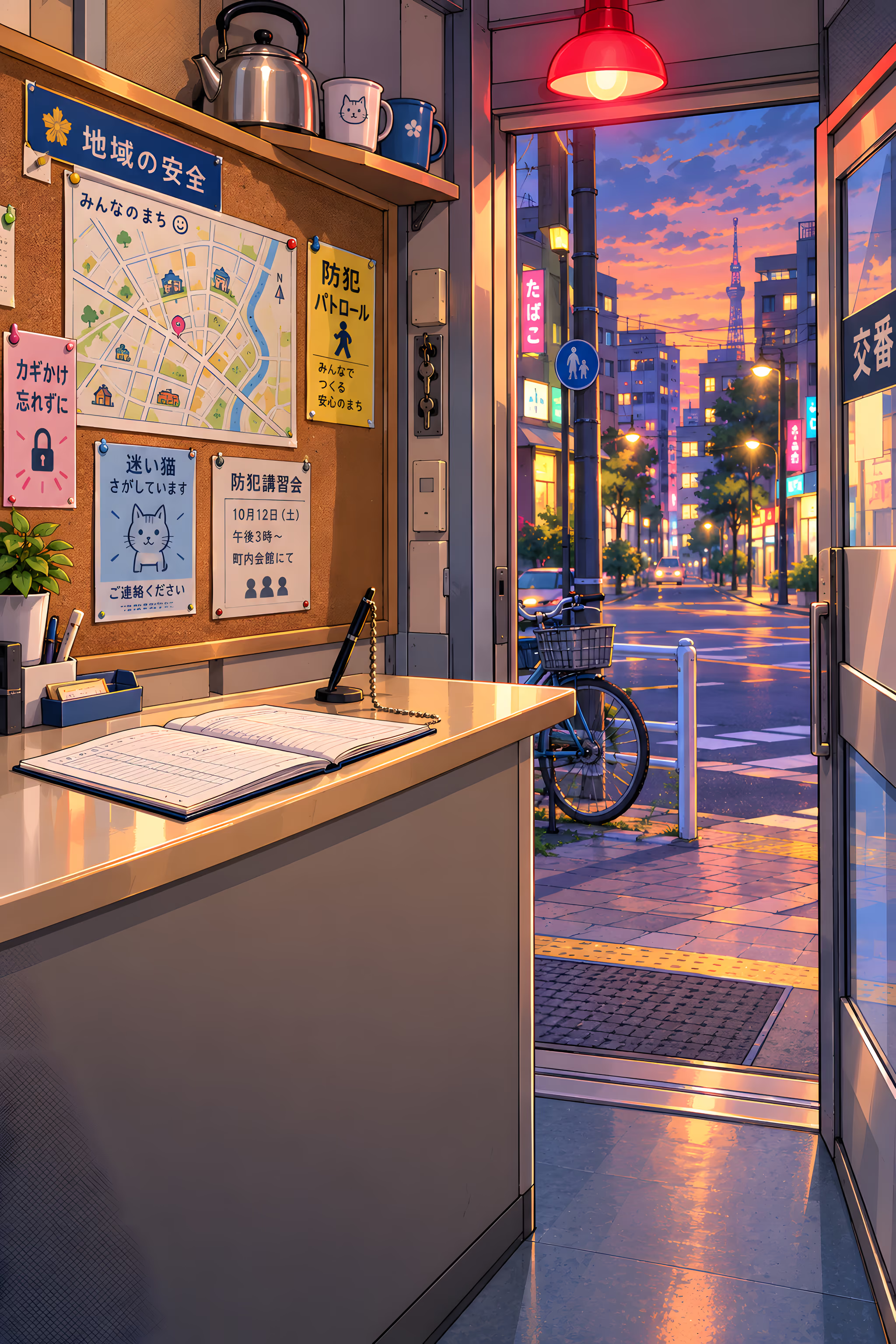
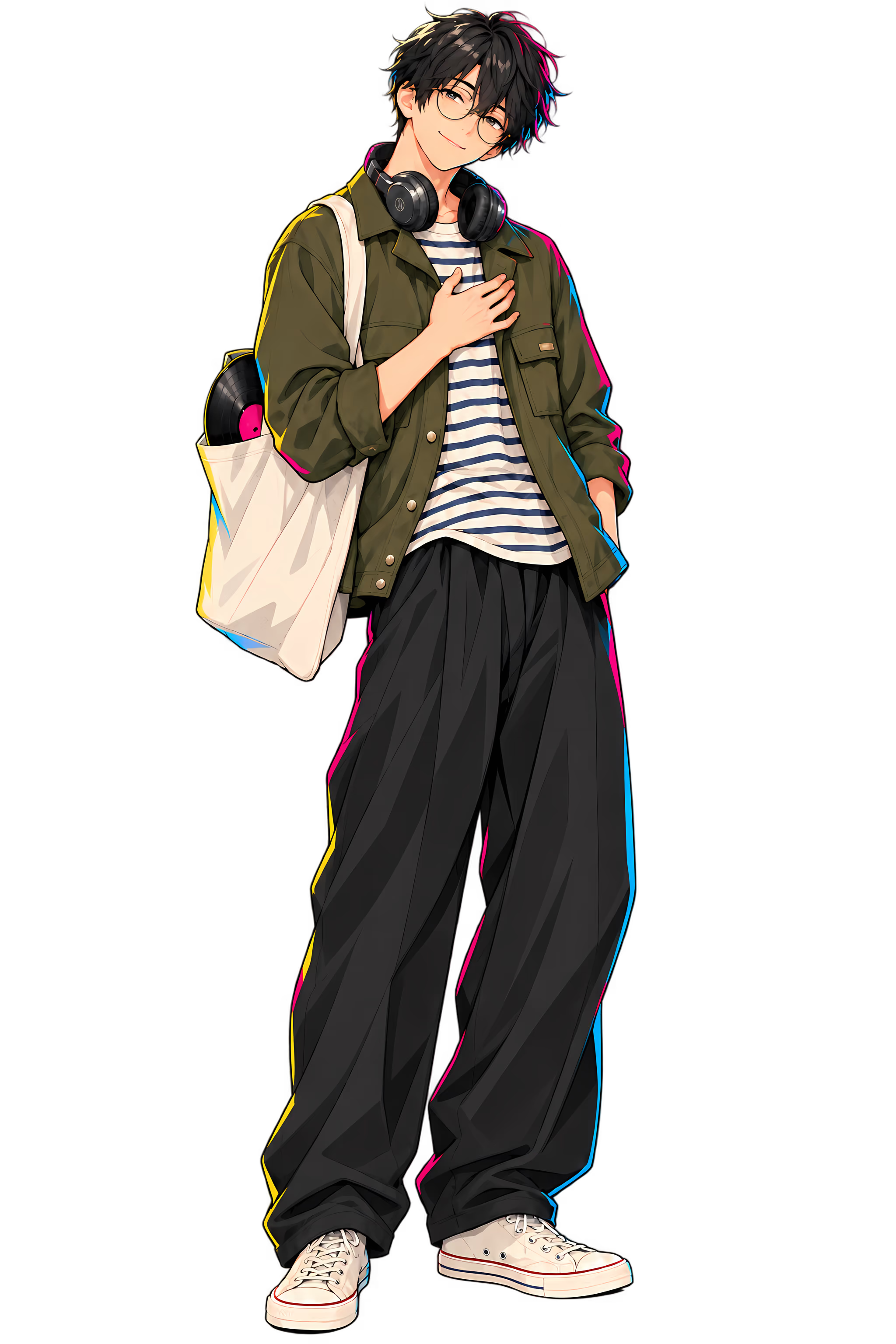
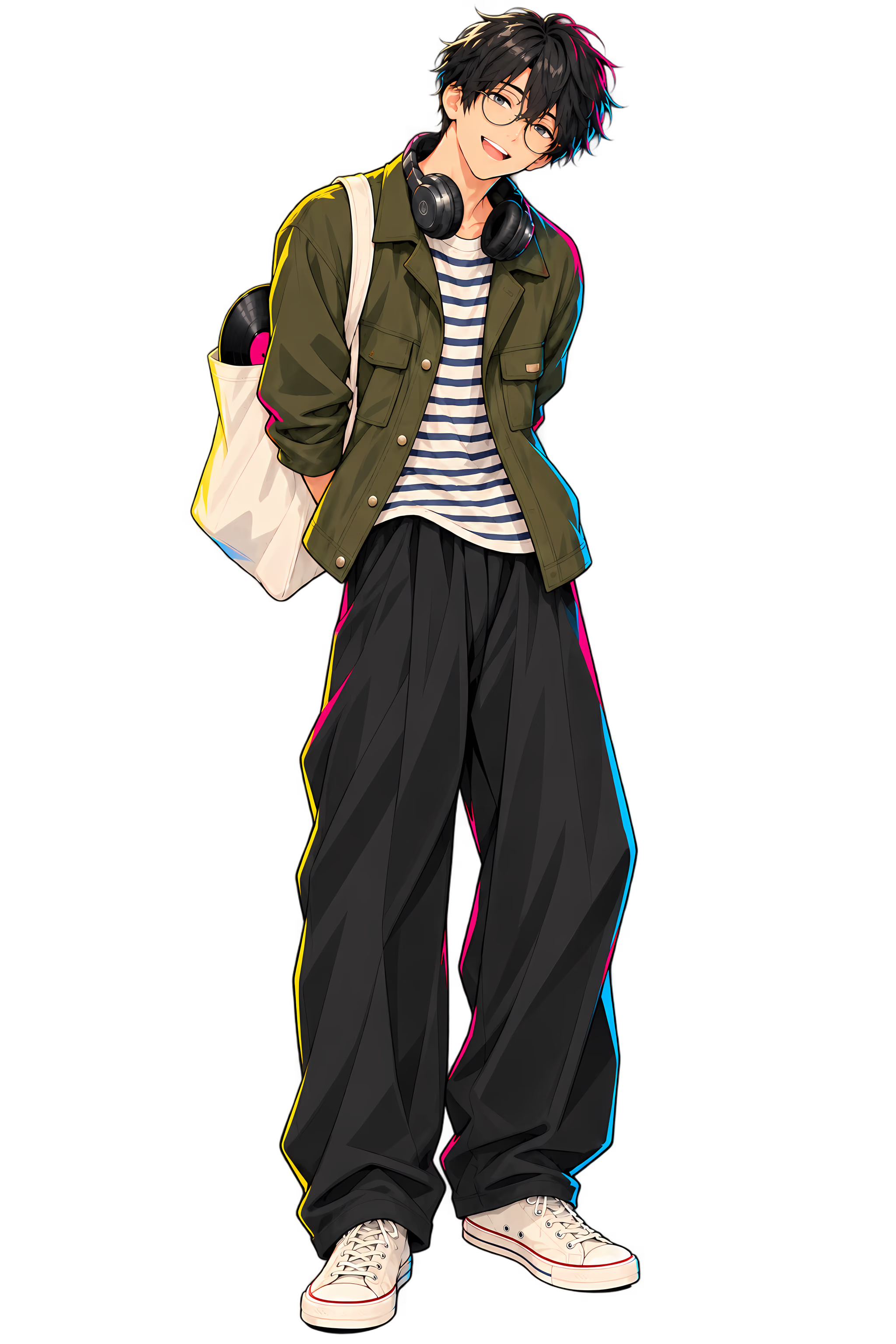
You're friends. You left your wallet on the train, and Ren noticed you going through your pockets. He's walked you to the police box on the corner to report it. Ren speaks first, in casual Japanese: plain forms, without です and ます, the way friends and family talk. Here is how it can begin, and the phrases and words worth having ready.
casualWith Ren, at the police box

How Ren opens the conversation
Ren always speaks first. This is the scene's own opening line, with a reply you could give back at the same level:
財布、どんなやつだっけ?色は?
Saifu, donna yatsu dakke? Iro wa?
What does the wallet look like again? What color?
You could say
茶色の小さい革の財布だよ。
Chairo no chiisai kawa no saifu da yo.
It's a small brown leather one.
Other ways it can begin
No two conversations go the same way, and the first line changes too. Each of these can open the scene:
おまわりさん、今電話中みたいだね。
Omawari-san, ima denwa-chū mitai da ne.
Looks like the officer's on the phone right now.
You could say
ほんとだ。ちょっと待とう。
Honto da. Chotto matō.
You're right. Let's wait a bit.
とりあえず座ろう。そこ空いてる。
Toriaezu suwarō. Soko aiteru.
Let's sit down for now. That seat's free.
You could say
うん、そうする。ありがとう。
Un, sō suru. Arigatō.
Yeah, I'll do that. Thanks.
俺も前に定期なくしたけど、出てきたよ。
Ore mo mae ni teiki nakushita kedo, detekita yo.
I lost my train pass once too, but it turned up.
You could say
ほんと?ちょっと安心した。
Honto? Chotto anshin shita.
Really? That makes me feel a little better.
何号車に乗ってたか覚えてる?
Nangōsha ni notteta ka oboeteru?
Do you remember which car you were in?
You could say
たぶん、一番前の車両。
Tabun, ichiban mae no sharyō.
Probably the very first car.
中に何入ってた?カードとか?
Naka ni nani haitteta? Kādo toka?
What was inside it? Cards and stuff?
You could say
カードと、あと現金が少し。
Kādo to, ato genkin ga sukoshi.
Cards, and a little cash.


Phrases worth knowing here
Lines for what you do at the police box, each with when you'd say it.
- 財布、電車に忘れたかもsaifu, densha ni wasureta kamoI might've left my wallet on the train.Say this first, to Ren or to the officer, when you realize it's gone.
- とりあえず届け出しとこうtoriaezu todokede shitokouLet's file a report for now.Ren's suggestion as you walk in; you can echo it to agree.
- 何線に乗ってたんだっけ?nanisen ni notteta n dakke?Which line were you on again?Ren will ask this while you try to remember; useful to understand and answer.
- 中身、何入ってた?nakami, nani haitteta?What was in it?Asked when listing the contents for the report — cash, cards, ID.
- 見つかったら連絡くれるってmitsukattara renraku kureru tteThey said they'll call if it turns up.Say this to wrap up after the officer explains what happens next.
Words you'll hear
| Japanese | Romaji | Meaning |
|---|---|---|
| 交番 | kōban | police box |
| 財布 | saifu | wallet |
| 落とし物 | otoshimono | lost item |
| 忘れる | wasureru | to leave behind, forget |
| 届ける | todokeru | to report/turn in (to authorities) |
| 中身 | nakami | contents (what's inside) |
| 現金 | genkin | cash |
| 連絡 | renraku | contact, a call/message |
| 用紙 | yōshi | form (to fill out) |
| 特徴 | tokuchō | distinguishing features (color, shape) |
How polite to be
casual Here Ren speaks casual Japanese: plain forms, without です and ます, the way friends and family talk, and the replies suggested to you match the level you'd use back. The guide to keigo explains the three levels, and when each is right.
Try it out loud
In Unsubtitled, Ren says these lines in their own voice, and answers whatever you say back, typed or dictated, with furigana, romaji, and a translation until you no longer need them.
Start talkingMore scenes with Ren
- Asking the way蓮(れん) · Train stationpolite
- At the record shop蓮(れん) · Record shopformal
- Drinks after work蓮(れん) · Izakayacasual
- A night at the arcade蓮(れん) · Game centercasual
- Cherry blossoms in the park蓮(れん) · Parkcasual
- Sending a parcel home蓮(れん) · Post officecasual
- Looking for a place to live蓮(れん) · Real estate agencycasual
- Choosing new glasses蓮(れん) · Glasses shopcasual
- At the top of the mountain蓮(れん) · Mountain summitcasual



Or see every scene, with all four characters.