In the art studio
Talking about art in Japanese: words and phrases
You're friends. Mei is showing you the painting she's been working on at her art school. Mei speaks first, in casual Japanese: plain forms, without です and ます, the way friends and family talk. Here is how it can begin, and the phrases and words worth having ready.
casualWith Mei, at the art studio
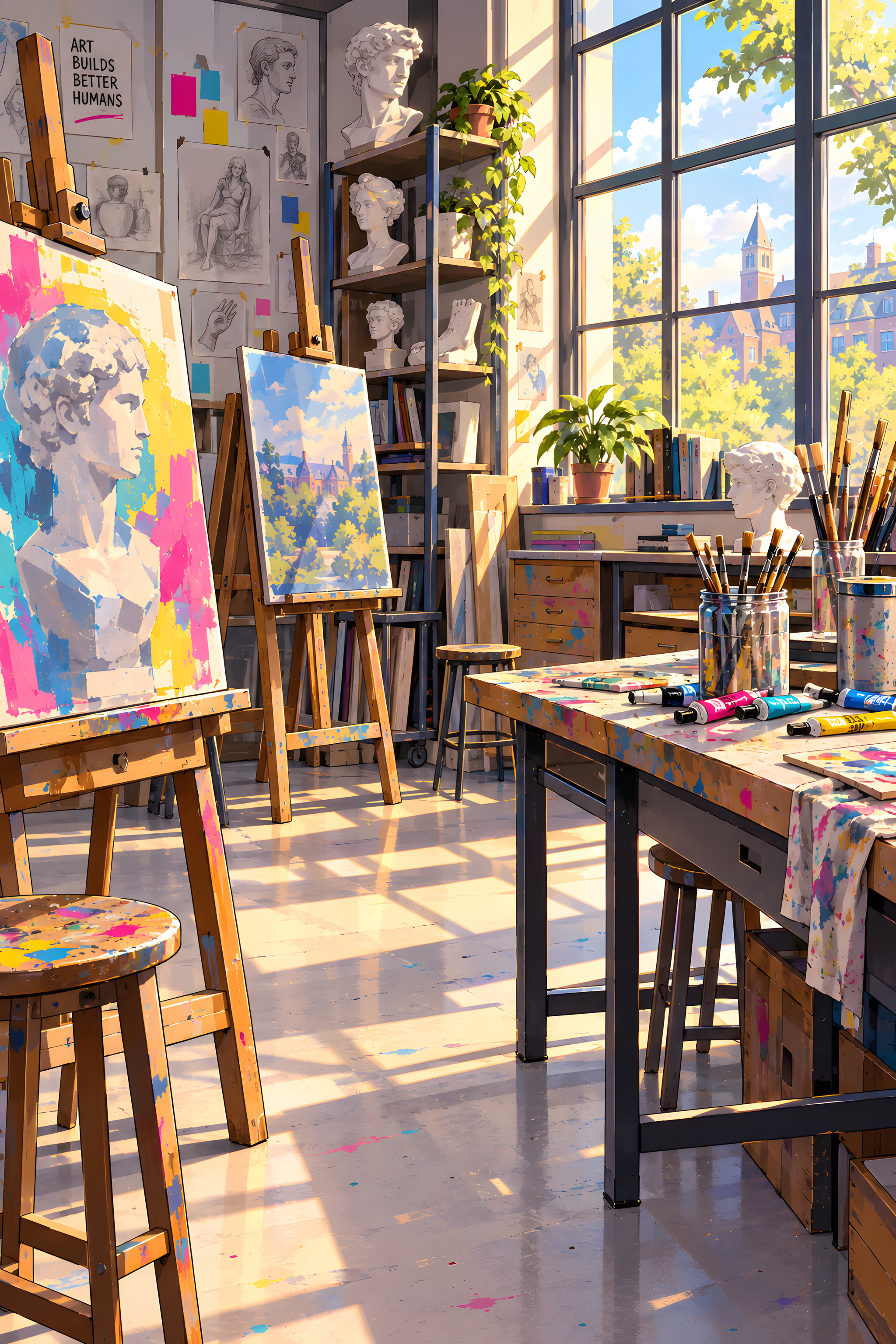

How Mei opens the conversation
Mei always speaks first. This is the scene's own opening line, with a reply you could give back at the same level:
じゃーん!これ、今描いてる絵なんだ。どう思う?
Jān! Kore, ima kaiteru e nan da. Dō omou?
Ta-da! This is the painting I'm working on. What do you think?
You could say
すごい!色がきれいだね。
Sugoi! Iro ga kirei da ne.
Wow! The colors are beautiful.
Other ways it can begin
No two conversations go the same way, and the first line changes too. Each of these can open the scene:
見て、手も服も絵の具だらけ!
Mite, te mo fuku mo enogu darake!
Look, my hands and clothes are covered in paint!
You could say
本当だ、すごいね。
Hontō da, sugoi ne.
You really are — wow.
ねえ、空の色、青とピンクどっちがいい?
Nē, sora no iro, ao to pinku docchi ga ii?
Hey, for the sky — blue or pink, which is better?
You could say
ピンクかな。きれいだよ。
Pinku ka na. Kirei da yo.
Pink, I think. It's pretty.
ちょっとそこ座ってみて。描きたいんだ!
Chotto soko suwatte mite. Kakitai n da!
Sit over there for a sec. I want to draw you!
You could say
えー、緊張するなあ。
Ē, kinchō suru nā.
Whaat, that makes me nervous.
そういえば、絵とか描くの?
Sō ieba, e toka kaku no?
By the way, do you draw at all?
You could say
たまに描くよ。下手だけど。
Tama ni kaku yo. Heta da kedo.
Sometimes. I'm bad at it, though.
この絵ね、来月の展示に出すんだ!
Kono e ne, raigetsu no tenji ni dasu n da!
This painting — I'm putting it in next month's exhibition!
You could say
すごい!楽しみだね。
Sugoi! Tanoshimi da ne.
That's great! I'm looking forward to it.




Phrases worth knowing here
Lines for what you do at the art studio, each with when you'd say it.
- 近くで見てもいい?Chikaku de mite mo ii?Can I look at it up close?Say this before stepping toward her canvas to inspect the details.
- この色、すごくいいねKono iro, sugoku ii neThis color is really nice.A natural, specific compliment while looking at her painting.
- 何を描いたの?Nani o kaita no?What did you paint?Use when the subject of the picture isn't obvious to you.
- 完成まであとどのくらい?Kansei made ato dono kurai?How much longer until it's finished?Ask when she says the painting is still a work in progress.
- タイトル、もう決めた?Taitoru, mō kimeta?Have you decided on a title yet?A fun follow-up question once she's told you about the piece.
Words you'll hear
| Japanese | Romaji | Meaning |
|---|---|---|
| 絵 | e | picture, painting |
| 描く | kaku | to draw, to paint |
| 色 | iro | color |
| 作品 | sakuhin | artwork, piece |
| アトリエ | atorie | studio, atelier |
| 油絵 | aburae | oil painting |
| 下手 | heta | bad at, unskilled |
| 上手 | jōzu | good at, skillful |
| まだ | mada | still, not yet |
| 完成 | kansei | completion, finished |
How polite to be
casual Here Mei speaks casual Japanese: plain forms, without です and ます, the way friends and family talk, and the replies suggested to you match the level you'd use back. The guide to keigo explains the three levels, and when each is right.
Try it out loud
In Unsubtitled, Mei says these lines in their own voice, and answers whatever you say back, typed or dictated, with furigana, romaji, and a translation until you no longer need them.
Start talkingMore scenes with Mei
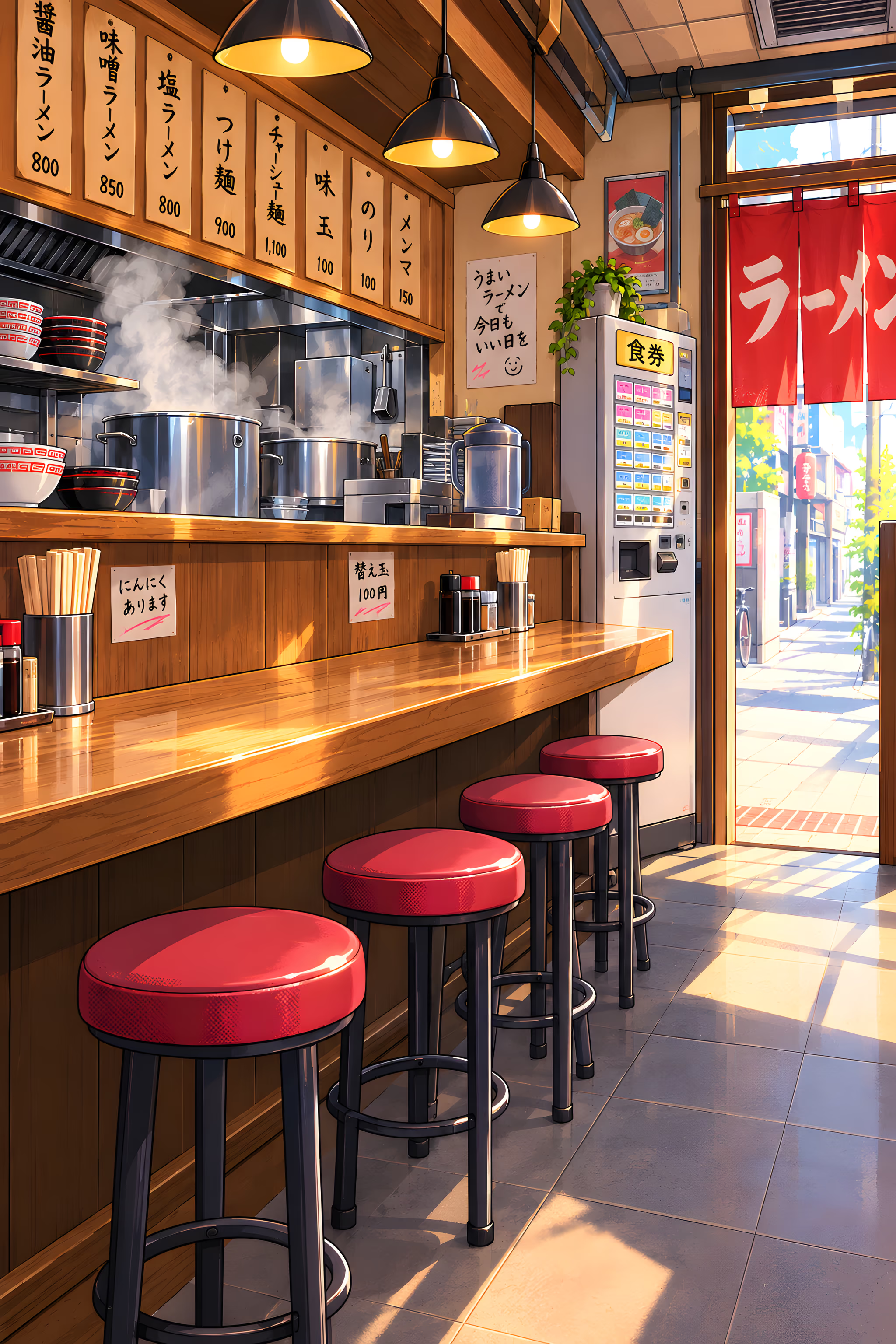
- Lunch at a ramen shop芽衣(めい) · Ramen shopcasual
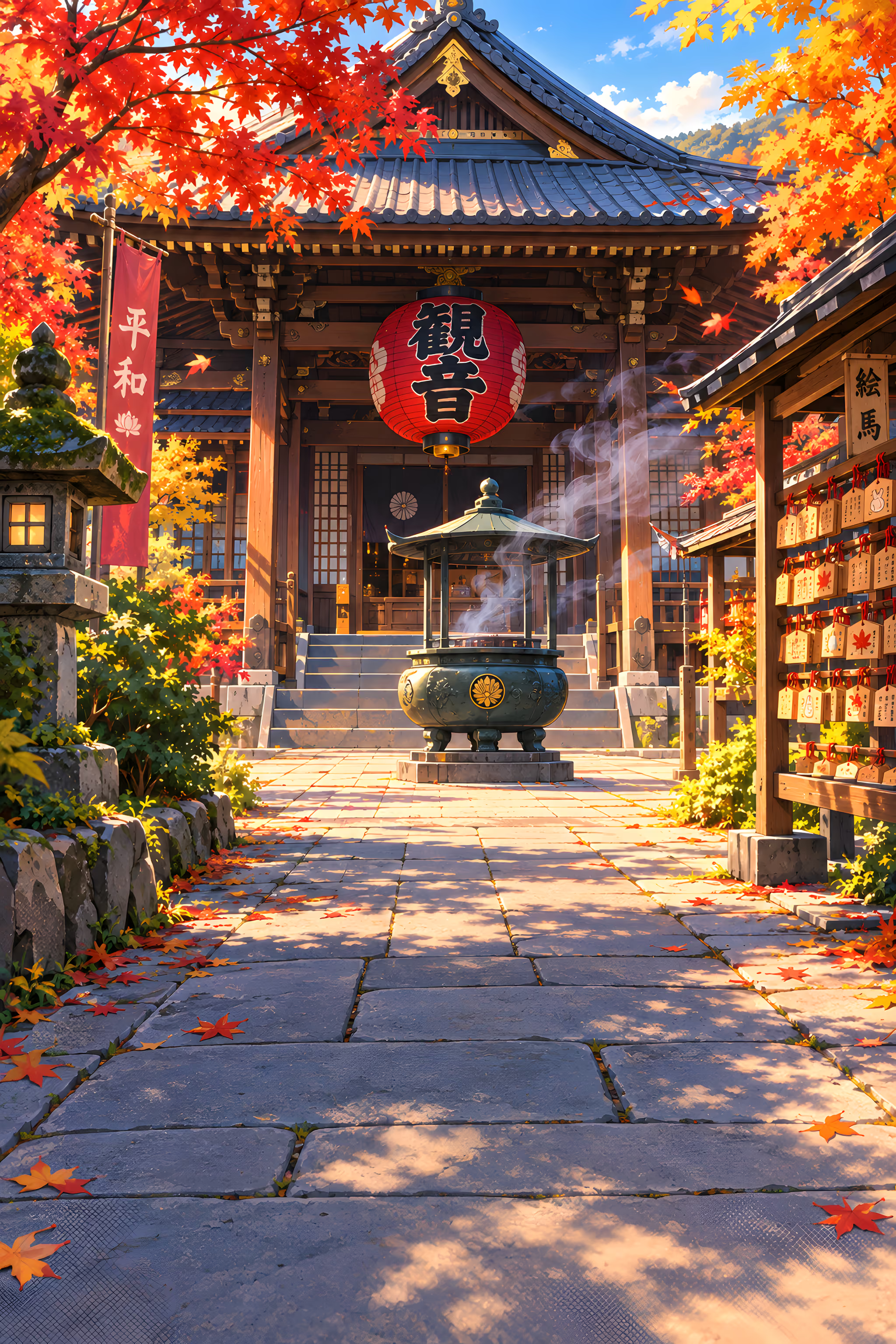
- Autumn at the temple芽衣(めい) · Templecasual
- Late-night snack run芽衣(めい) · Convenience storecasual
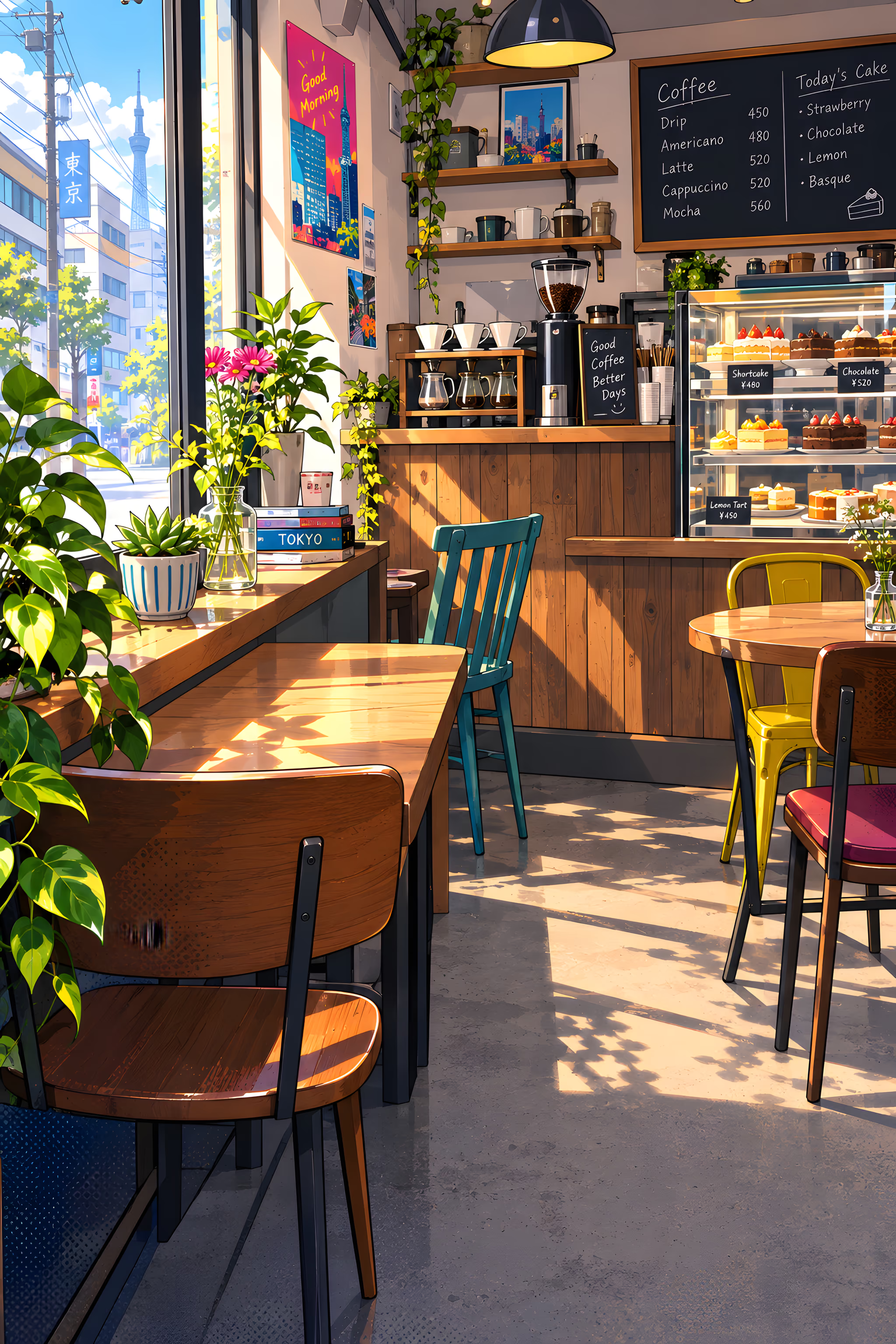
- Coffee and cake芽衣(めい) · Cafécasual
- Summer festival芽衣(めい) · Summer festivalcasual
- Waiting at the clinic芽衣(めい) · Cliniccasual
- Asking for a haircut芽衣(めい) · Hair saloncasual
- Sorting out your phone芽衣(めい) · Phone shopcasual
- Camping by the river芽衣(めい) · Riverside campsitecasual



Or see every scene, with all four characters.