Autumn at the temple
Visiting a temple in Japanese: words and phrases
You're friends, visiting a temple together on an autumn afternoon. Mei speaks first, in casual Japanese: plain forms, without です and ます, the way friends and family talk. Here is how it can begin, and the phrases and words worth having ready.
casualWith Mei, at the temple
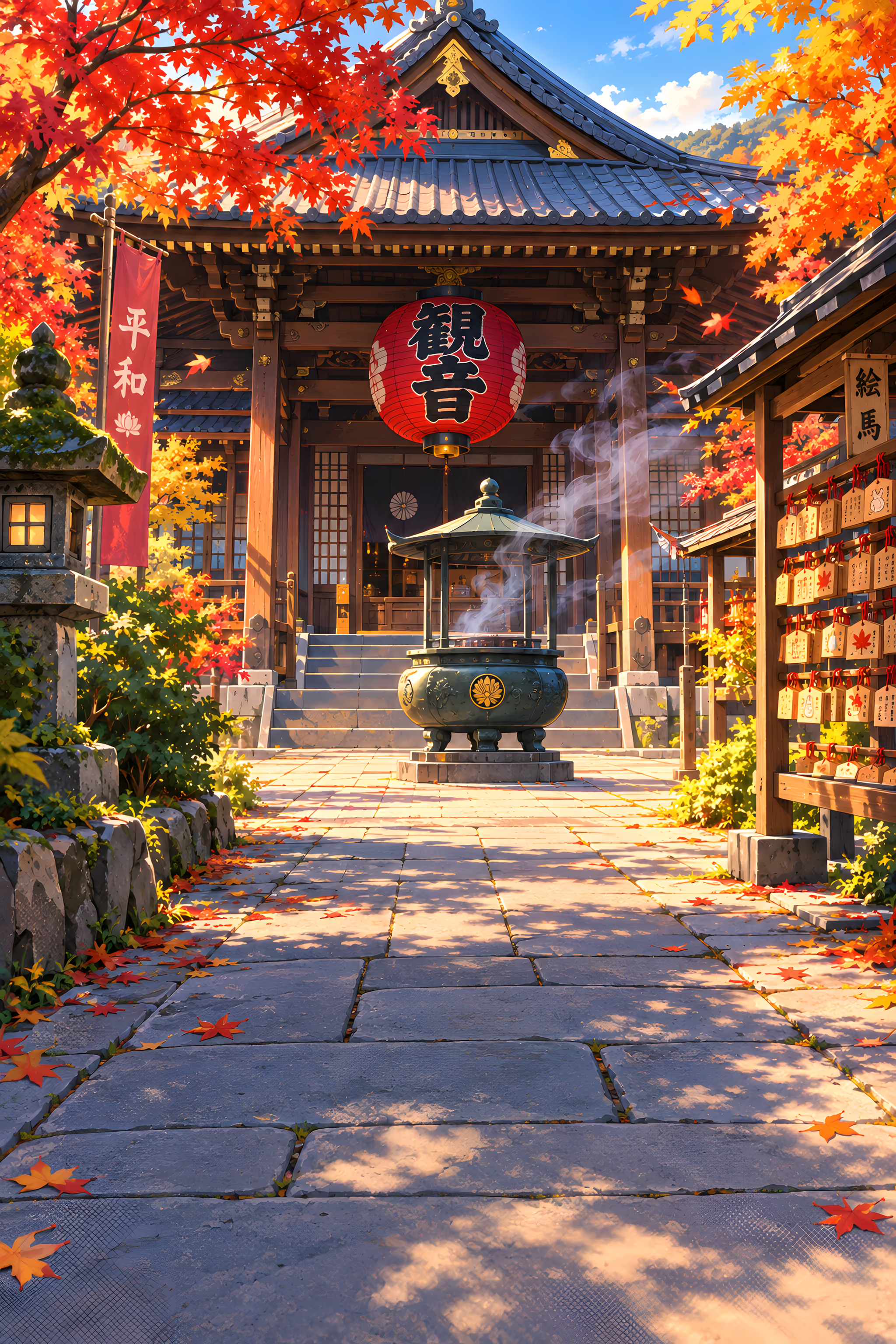

How Mei opens the conversation
Mei always speaks first. This is the scene's own opening line, with a reply you could give back at the same level:
わあ、見て!紅葉がすごくきれい!
Wā, mite! Kōyō ga sugoku kirei!
Wow, look! The autumn leaves are so beautiful!
You could say
本当だね。一緒に写真を撮ろう!
Hontō da ne. Issho ni shashin o torō!
They really are. Let's take a picture together!
Other ways it can begin
No two conversations go the same way, and the first line changes too. Each of these can open the scene:
おみくじ引いてみない?私、まだ今年引いてないんだ。
Omikuji hiite minai? Watashi, mada kotoshi hiitenai n da.
Want to draw a fortune? I haven't drawn one yet this year.
You could say
いいね、引いてみよう。
Ii ne, hiite miyō.
Sounds good, let's try one.
見て、この絵馬!みんな願い事書いてるね。
Mite, kono ema! Minna negaigoto kaiteru ne.
Look, these ema plaques! Everyone's writing their wishes.
You could say
本当だ。芽衣も書く?
Hontō da. Mei mo kaku?
You're right. Are you going to write one too, Mei?
ねえ、お参りの仕方って知ってる?
Nē, omairi no shikata tte shitteru?
Hey, do you know how to pray properly here?
You could say
うーん、よく知らない。教えて。
Ūn, yoku shiranai. Oshiete.
Hmm, not really. Show me.
静かだね。さっきの鐘の音、聞こえた?
Shizuka da ne. Sakki no kane no oto, kikoeta?
It's so quiet. Did you hear that bell just now?
You could say
うん、聞こえた。いい音だったね。
Un, kikoeta. Ii oto datta ne.
Yeah, I heard it. It sounded lovely.
この景色、スケッチしたいなあ。ちょっと待ってて?
Kono keshiki, suketchi shitai nā. Chotto mattete?
I really want to sketch this view. Can you wait a sec?
You could say
いいよ、ゆっくりどうぞ。
Ii yo, yukkuri dōzo.
Sure, take your time.




Phrases worth knowing here
Lines for what you do at the temple, each with when you'd say it.
- 紅葉、きれいだねkōyō, kirei da neThe autumn leaves are beautiful, huh.Say it while looking up at the red and yellow trees in the temple grounds.
- お参りしていこうよomairi shite ikō yoLet's go say a prayer.Use when suggesting you stop at the main hall before wandering off.
- おみくじ引いてみようよomikuji hiite miyō yoLet's try drawing a fortune.Say it near the fortune-slip box to invite your friend to try one too.
- 写真撮ってあげようかshashin totte ageyō kaWant me to take your picture?Offer this when your friend is posing in front of the gate or the leaves.
- お線香のいい匂いがするosenkō no ii nioi ga suruIt smells like incense.A natural little comment as you pass the incense burner.
Words you'll hear
| Japanese | Romaji | Meaning |
|---|---|---|
| お寺 | otera | temple |
| 紅葉 | momiji | autumn leaves; maple |
| 秋 | aki | autumn |
| お参り | omairi | visiting to pray |
| おみくじ | omikuji | paper fortune |
| お守り | omamori | lucky charm |
| きれい | kirei | pretty; beautiful |
| 写真 | shashin | photo |
| 落ち葉 | ochiba | fallen leaves |
| 寒い | samui | cold |
How polite to be
casual Here Mei speaks casual Japanese: plain forms, without です and ます, the way friends and family talk, and the replies suggested to you match the level you'd use back. The guide to keigo explains the three levels, and when each is right.
Try it out loud
In Unsubtitled, Mei says these lines in their own voice, and answers whatever you say back, typed or dictated, with furigana, romaji, and a translation until you no longer need them.
Start talkingMore scenes with Mei
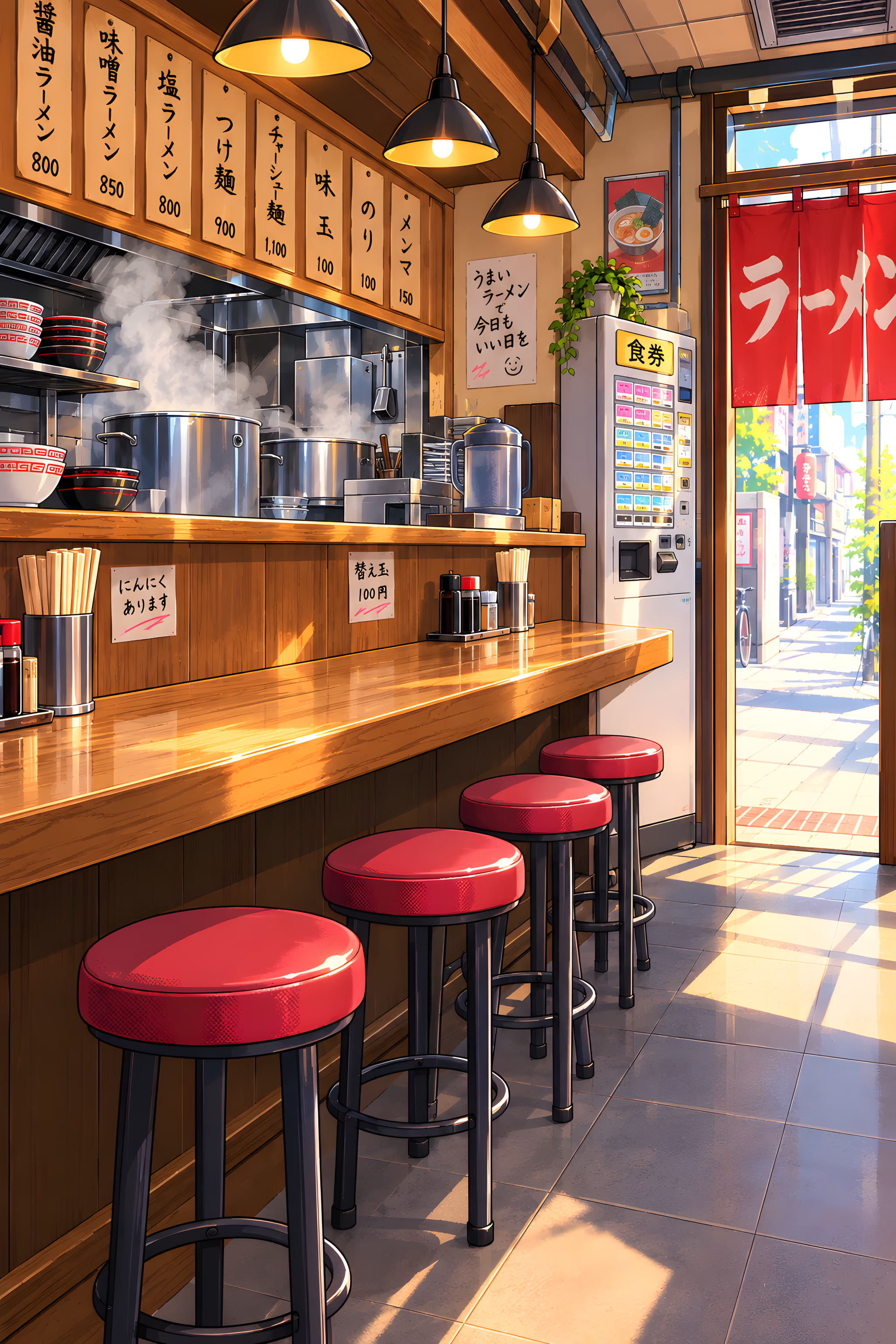
- Lunch at a ramen shop芽衣(めい) · Ramen shopcasual
- Late-night snack run芽衣(めい) · Convenience storecasual
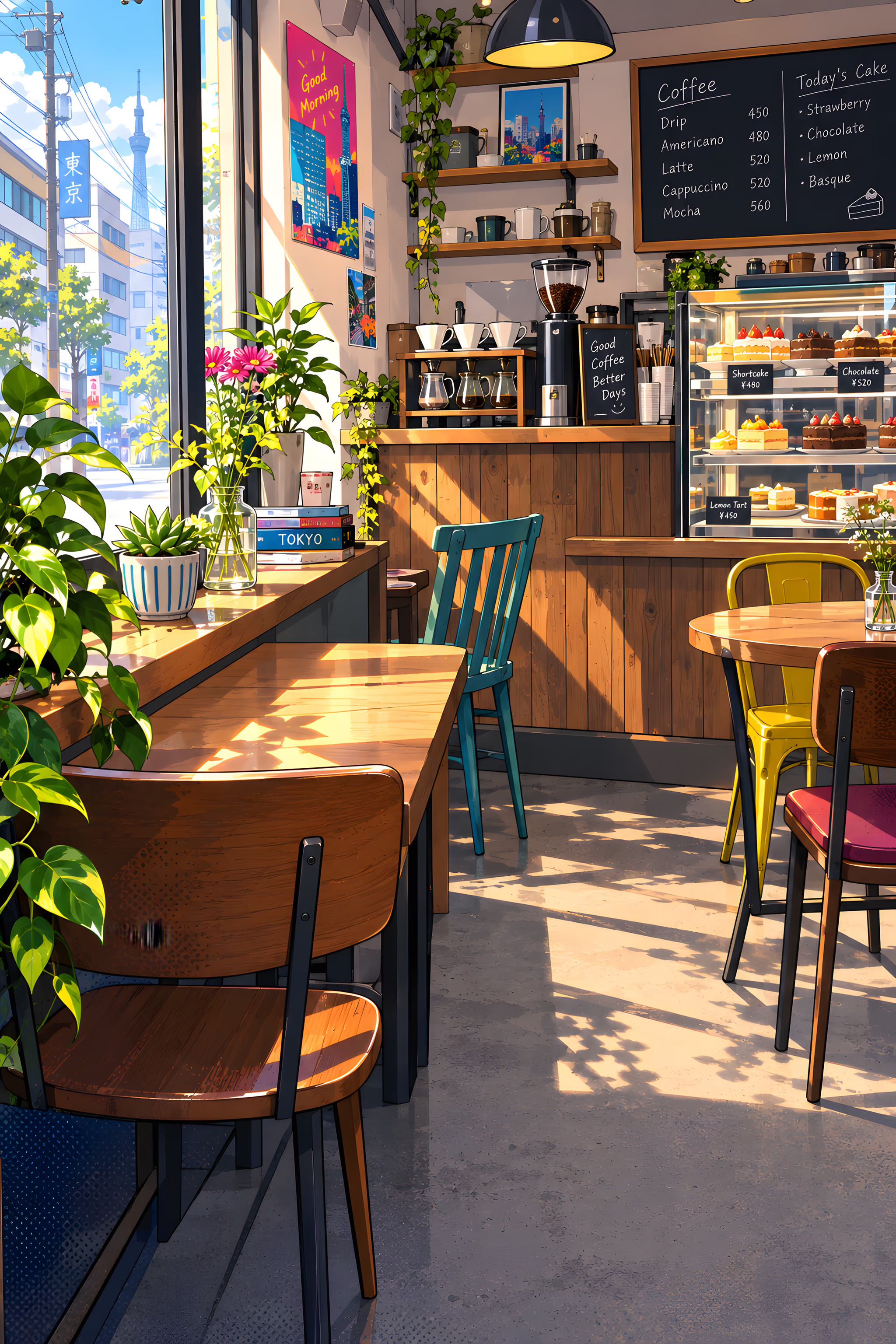
- Coffee and cake芽衣(めい) · Cafécasual
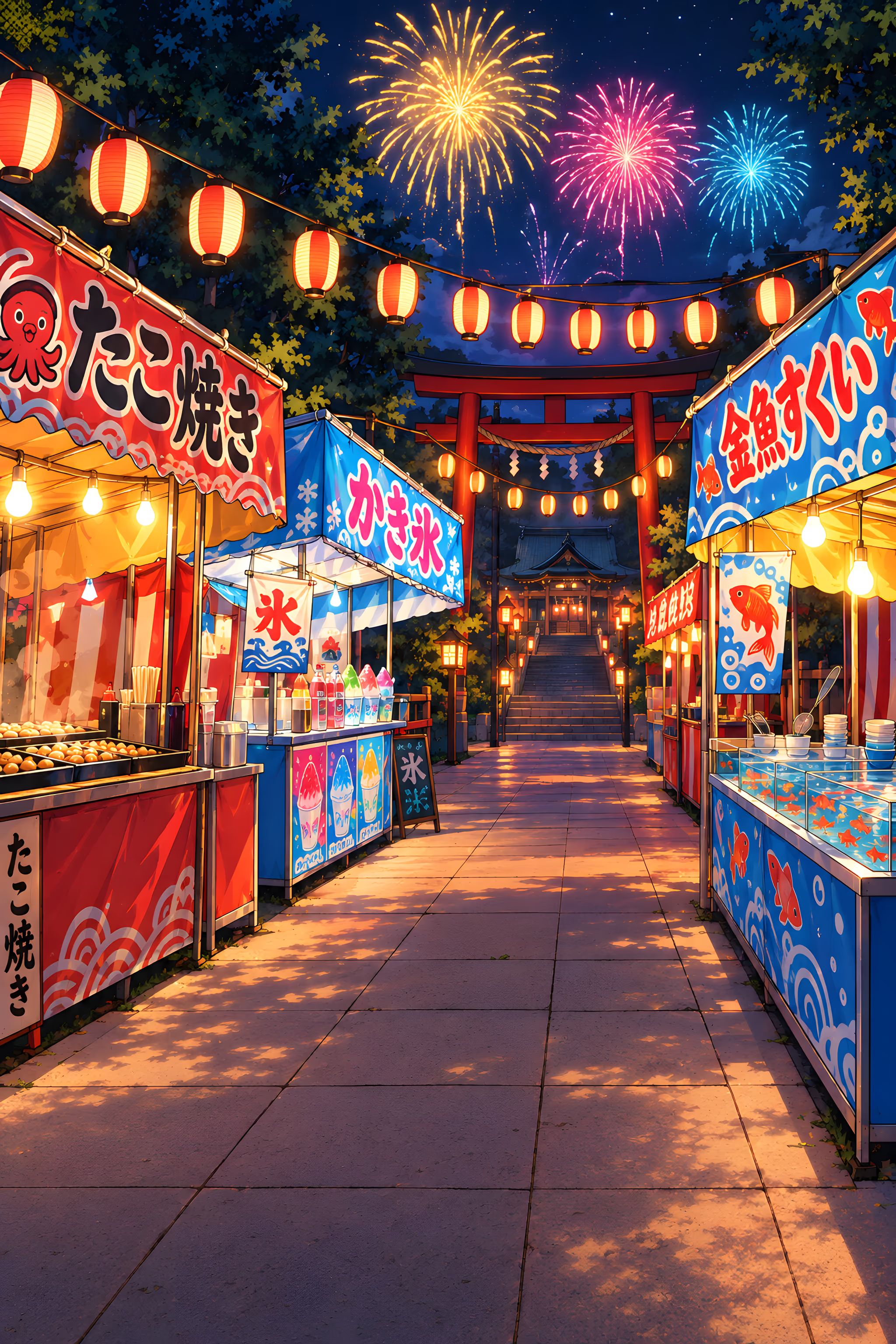
- Summer festival芽衣(めい) · Summer festivalcasual
- In the art studio芽衣(めい) · Art studiocasual
- Waiting at the clinic芽衣(めい) · Cliniccasual
- Asking for a haircut芽衣(めい) · Hair saloncasual
- Sorting out your phone芽衣(めい) · Phone shopcasual
- Camping by the river芽衣(めい) · Riverside campsitecasual






Or see every scene, with all four characters.