Checking in
Checking in at a Japanese airport: Japanese phrases
You've booked a tour through the agency where Yoko works, and she's at the airport seeing the group off. You've never met; check-in has just opened, and your case looks over the weight. Yoko speaks first, in keigo: the respectful and humble forms staff use with customers, and everyone uses with clients and superiors. Here is how it can begin, and the phrases and words worth having ready.
formalWith Yoko, at the airport
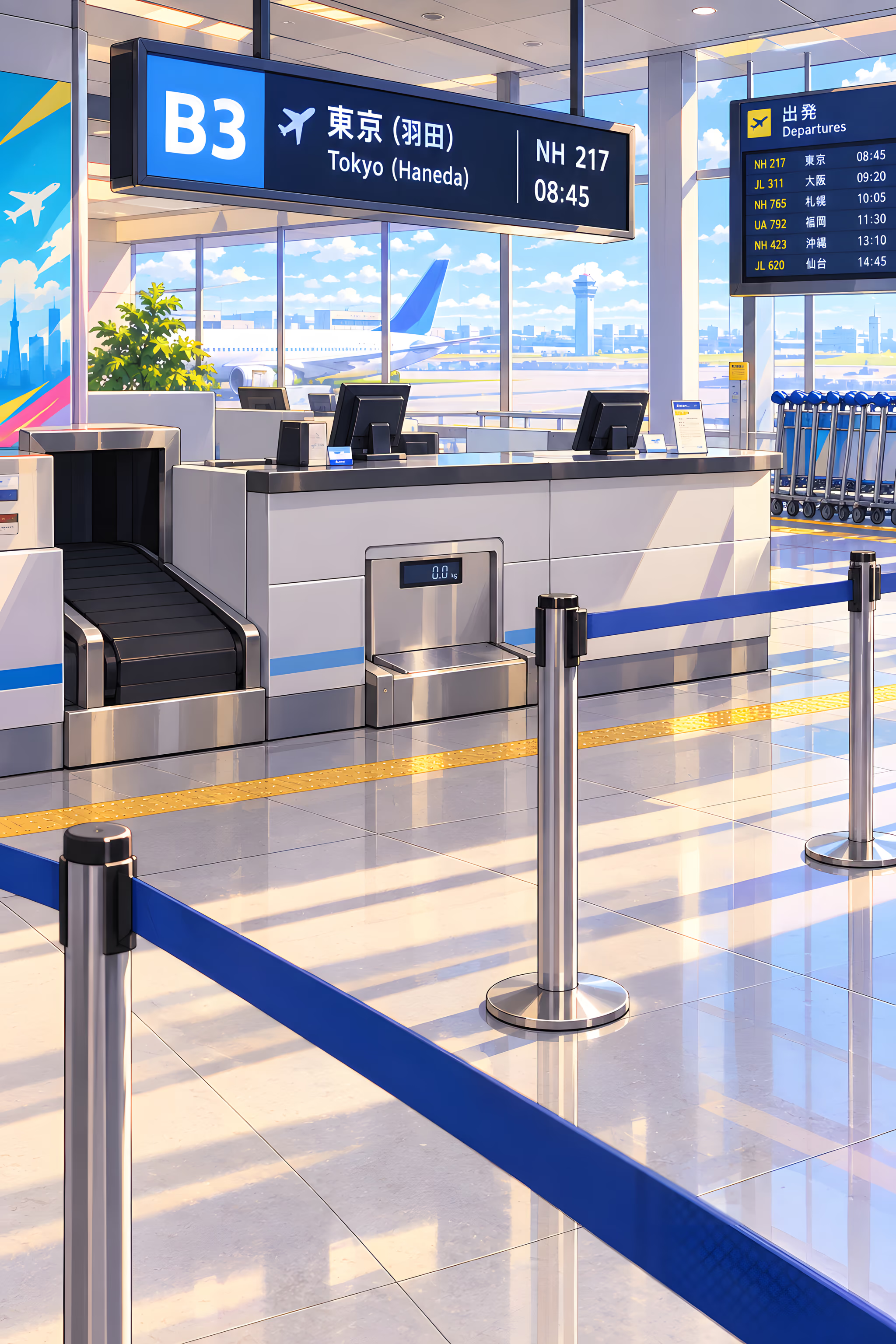
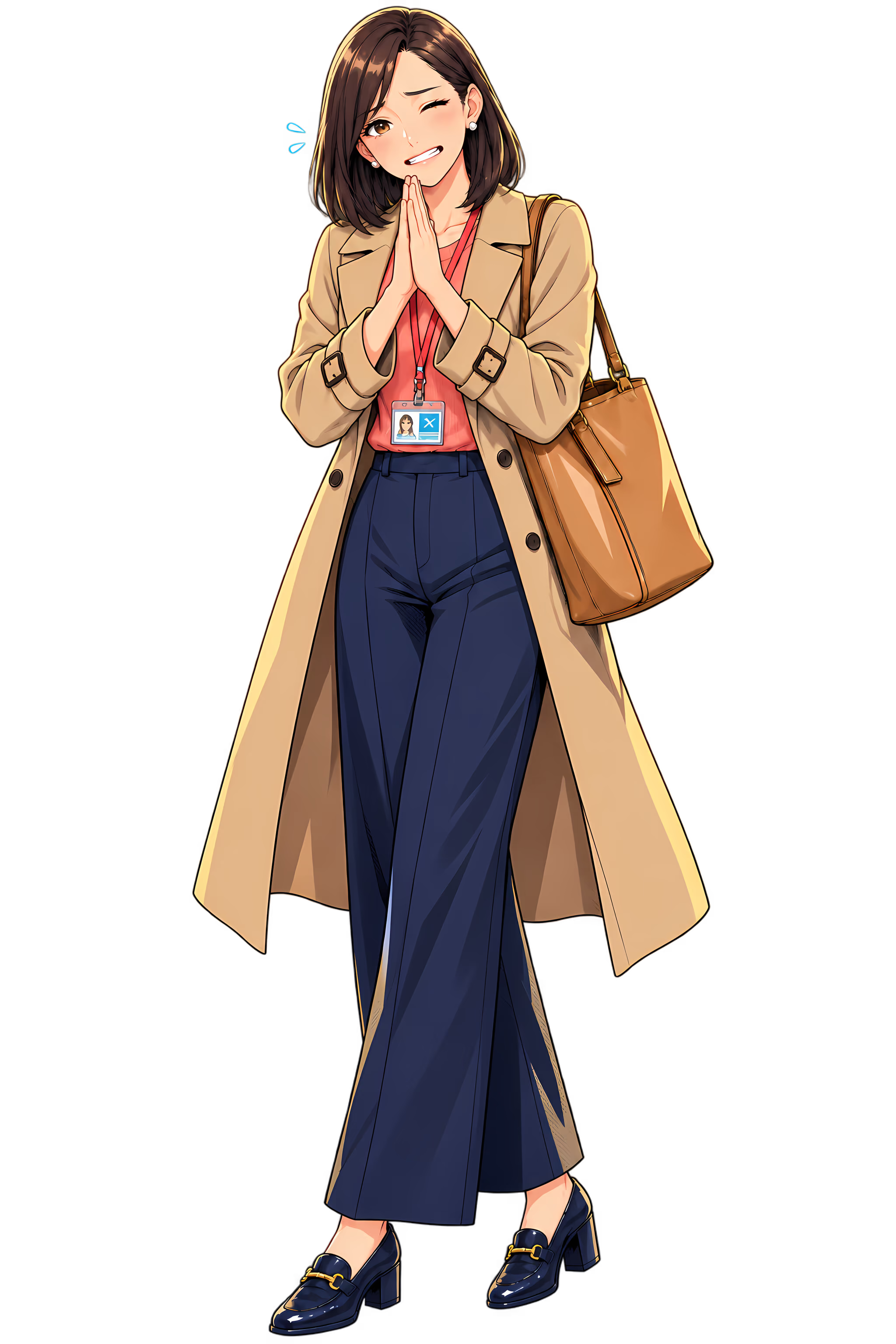
How Yoko opens the conversation
Yoko always speaks first. This is the scene's own opening line, with a reply you could give back at the same level:
お荷物、少し重いかもしれません。
Onimotsu, sukoshi omoi kamo shiremasen.
Your bag might be a little over the weight.
You could say
何キロまで大丈夫ですか?
Nan-kiro made daijōbu desu ka?
How many kilos are allowed?
Other ways it can begin
No two conversations go the same way, and the first line changes too. Each of these can open the scene:
おはようございます。旅行会社の高橋と申します。
Ohayō gozaimasu. Ryokō-gaisha no Takahashi to mōshimasu.
Good morning. I'm Takahashi, from the travel agency.
You could say
おはようございます。よろしくお願いします。
Ohayō gozaimasu. Yoroshiku onegai shimasu.
Good morning. Nice to meet you.
パスポートはお持ちですか。
Pasupōto wa omochi desu ka.
Do you have your passport with you?
You could say
はい、ここにあります。
Hai, koko ni arimasu.
Yes, it's right here.
ただいま受付が始まりました。
Tadaima uketsuke ga hajimarimashita.
Check-in has just opened.
You could say
わかりました。ありがとうございます。
Wakarimashita. Arigatō gozaimasu.
Got it. Thank you.
海外旅行は初めてでいらっしゃいますか。
Kaigai ryokō wa hajimete de irasshaimasu ka.
Is this your first time traveling abroad?
You could say
はい、初めてです。
Hai, hajimete desu.
Yes, it's my first time.
今日の空港、混んでおりますね。
Kyō no kūkō, konde orimasu ne.
The airport is crowded today, isn't it?
You could say
本当ですね。人が多いです。
Hontō desu ne. Hito ga ōi desu.
It really is. There are so many people.


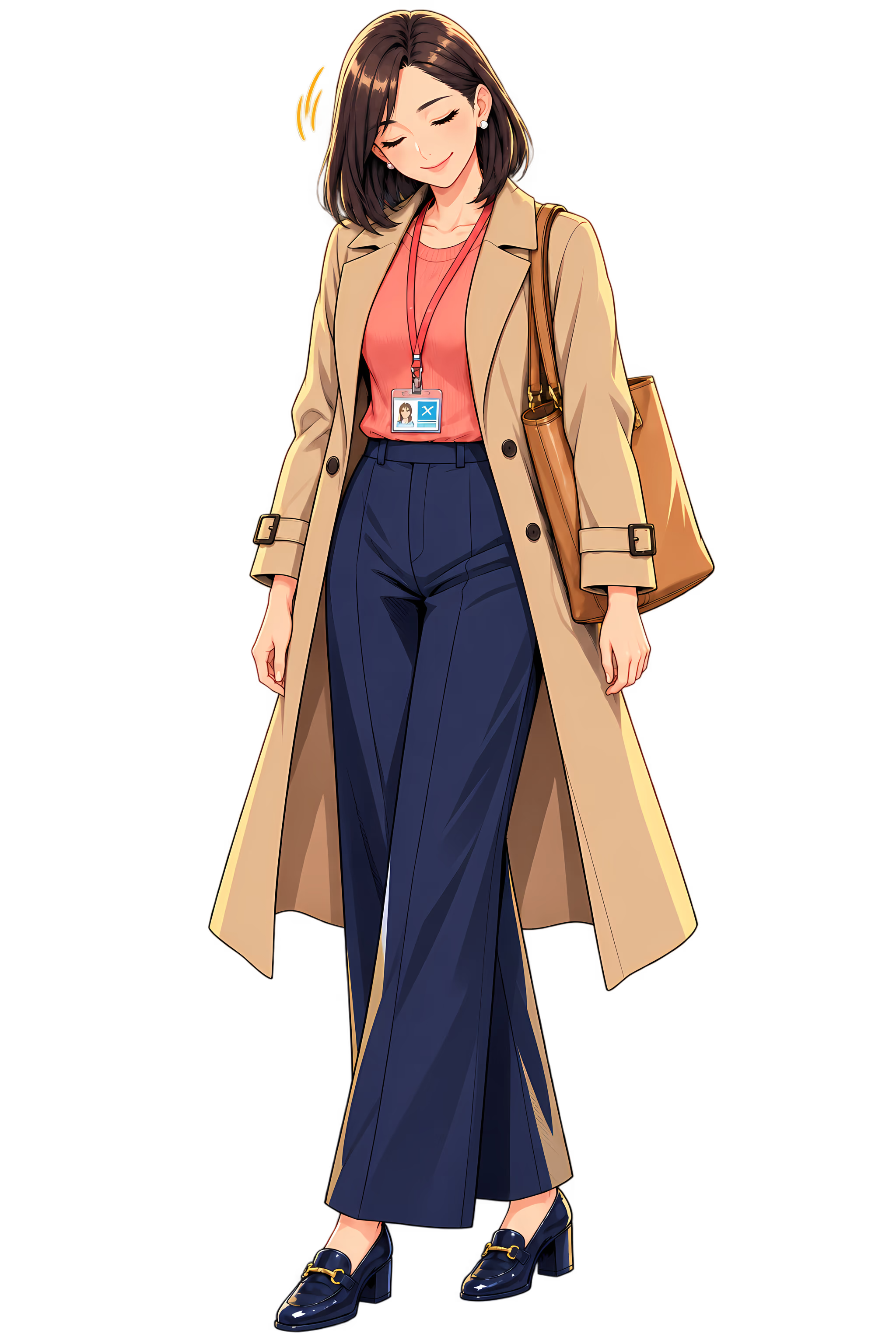


Phrases worth knowing here
Lines for what you do at the airport, each with when you'd say it.
- パスポートをお預かりいたします。Pasupōto o oazukari itashimasu.May I take your passport?Staff say this at the counter; just hand it over with どうぞ.
- 少し重量をオーバーしております。Sukoshi jūryō o ōbā shite orimasu.Your bag is a little over the weight limit.What Yoko or the airline staff will tell you when the case is too heavy.
- 少し中身を出して、手荷物に移してもいいですか。Sukoshi nakami o dashite, tenimotsu ni utsushite mo ii desu ka.Can I take some out and move it to my carry-on?Your way out of paying the excess fee.
- 窓側の席をお願いできますか。Madogawa no seki o onegai dekimasu ka.Could I have a window seat?Ask while your seat is being assigned.
- 何時までに搭乗口へ行けばよろしいでしょうか。Nanji made ni tōjōguchi e ikeba yoroshii deshō ka.By what time should I get to the gate?Ask Yoko after check-in, before you wander off shopping.
Words you'll hear
| Japanese | Romaji | Meaning |
|---|---|---|
| 搭乗券 | tōjōken | boarding pass |
| 手荷物 | tenimotsu | baggage, luggage |
| 預ける | azukeru | to check (bags) |
| 重量オーバー | jūryō ōbā | overweight (baggage) |
| 超過料金 | chōka ryōkin | excess baggage fee |
| 窓側 | madogawa | window side (seat) |
| 通路側 | tsūrogawa | aisle side (seat) |
| 搭乗口 | tōjōguchi | boarding gate |
| 保安検査 | hoan kensa | security check |
| モバイルバッテリー | mobairu batterī | portable battery (must be carried on) |
How polite to be
formal Here Yoko speaks keigo: the respectful and humble forms staff use with customers, and everyone uses with clients and superiors, and the replies suggested to you match the level you'd use back. The guide to keigo explains the three levels, and when each is right.
Try it out loud
In Unsubtitled, Yoko says these lines in their own voice, and answers whatever you say back, typed or dictated, with furigana, romaji, and a translation until you no longer need them.
Start talkingMore scenes with Yoko
- First day at the office陽子(ようこ) · Officepolite
- Planning a trip陽子(ようこ) · Travel agencyformal
- Celebrating a finished project陽子(ようこ) · Izakayacasual
- Opening an account陽子(ようこ) · Bankpolite
- Registering where you live陽子(ようこ) · Ward officepolite
- A stain before a meeting陽子(ようこ) · Dry cleanerpolite
- A trip to the dentist陽子(ようこ) · Dental clinicpolite
- A job interview陽子(ようこ) · Interview roomformal
- A hot spring getaway陽子(ようこ) · Hot spring townformal




Or see every scene, with all four characters.